

Sod – Watering New

The best time to water a lawn is in the morning, preferably before noon. This allows the grass to dry before nightfall, reducing the risk of disease. Take recent rainfall into account when deciding how much to apply.
Watering restrictions may impact how often you can irrigate. Check Georgia Drought for the latest information. If restrictions mandate watering every other day, the schedules below may be modified to fit the rules.
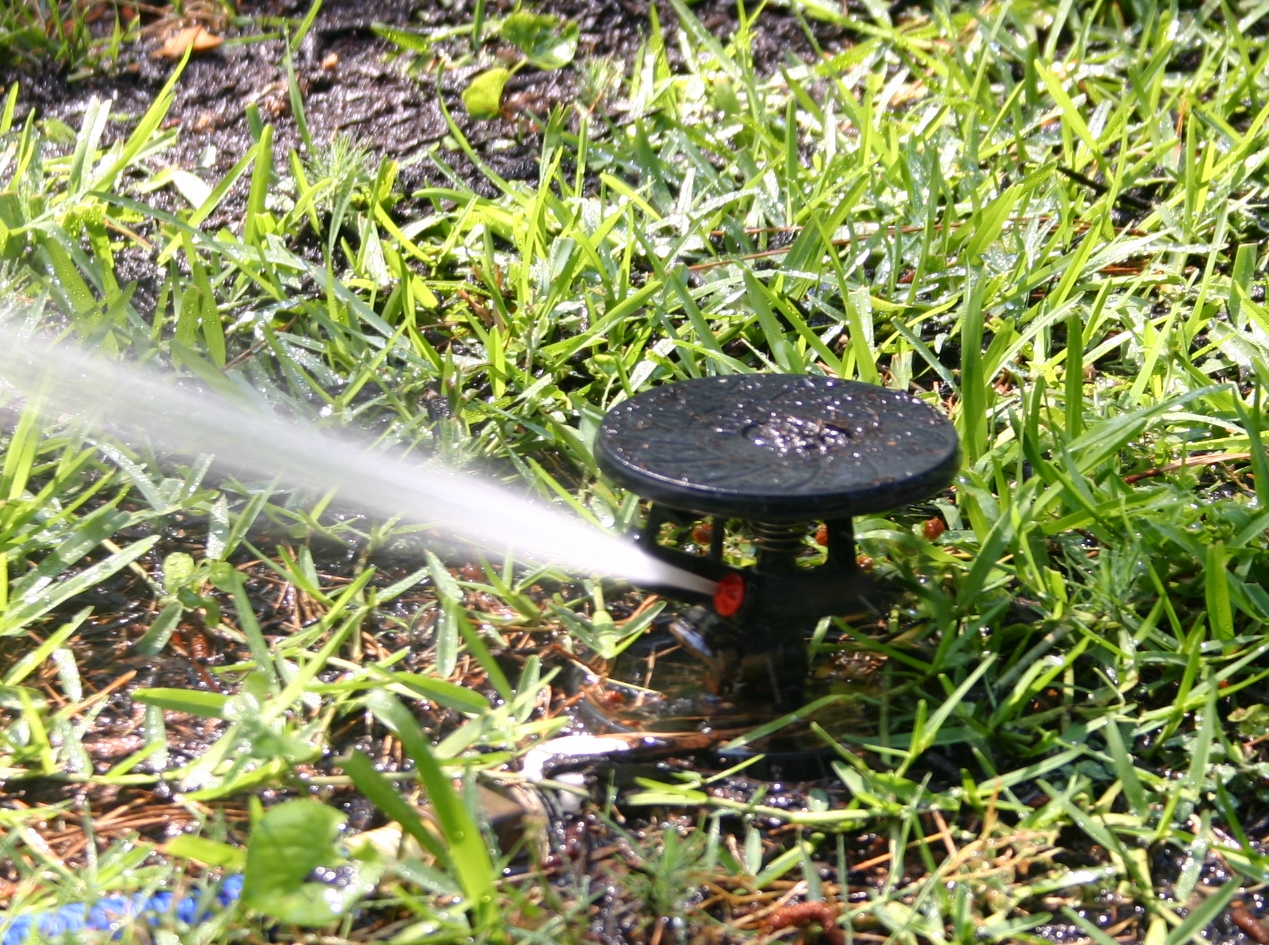
In order to water properly, you have to know how much water your system applies in a given amount of time.
How to measure the amount of water applied by irrigation:
- Place six identical containers randomly in the area wetted by one sprinkler.
It is possible to measure your whole system at one time but you’ll need three containers for each sprinkler zone.
Plastic cups can be used but weigh them down with a heavy washer in the bottom of each.
• Let your sprinkler run for an hour.
• Measure the depth of water that has accumulated in each cup.
• Calculate the average of the depths. This gives you the amount (in inches) that has been applied in an hour.
• Make a mental calculation of how long it will take to apply an inch of water.
• Don’t be surprised if your sprinkler must run for more than an hour to apply the water your lawn needs.
WATERING NEW SOD
• One inch of water immediately after sod is laid.
• Apply enough water daily to prevent the top one inch of soil from drying until sod is rooted to the soil. Gently tug on sod pieces to check rooting. The soil should not be soggy – just moist. Soggy soil leads to root disease.
• After sod is rooted, apply one-fourth inch of water every third day for nine days.
• Next apply one-half inch of water every fifth day for ten days.
• After this establishment period, apply one inch of water per week for the rest of the growing season.
• There is no need to water if rainfall supplies the correct amount.
(Use good judgment on the water amounts listed above. They may differ somewhat depending on what time of year you’re planting.)
•• Use a trowel to check how far water soaks into the soil after irrigation.
•• Heavy clay soil slowly absorbs water. If water runs off before it is absorbed, split the irrigation into two sessions an hour apart.
•• Sandy soil absorbs water rapidly but dries out quickly. Consider splitting the recommended inch of water per week into two irrigations of one-half inch of water three days apart.
-

-
-
1

Vines To Screen House Next Door
-
2
Centipede Grass – Prostrate Spruge
-
3

Bradford Pear – Is Shortening Limbs OK?
-
4

Identification – Red Spider Lily
-
5

Buffalonut – Identified
-
1
Identification – Red Spider Lily
-
2

Pine Cones- Opening
-
3
Buffalonut – Identified
-
4

Saddleback Caterpillars-Get Rid of Them
-
5

Tips for Pruning Rhododendrons
-


