Tips for Pruning Rhododendrons
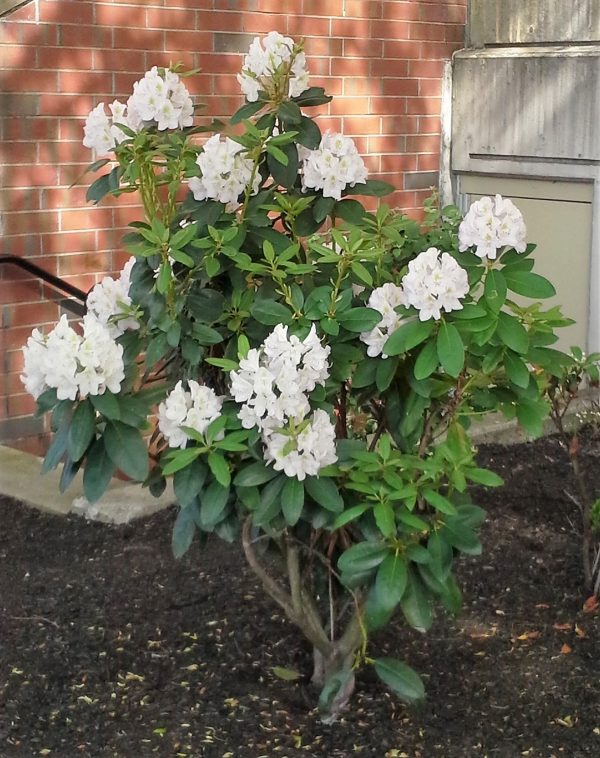
Q: I’m getting a new roof and need to prune two rhododendrons back from the driveway to keep the trucks from damaging them. I wonder if you might have any tips?
A: Before I do any pruning on a shrub, I follow the three D’s: removing Dead, Diseased, and Damaged branches. Dead limbs are obvious removal candidates. Look also for weak branches ― those that have just a few small leaves. Remove them too because they won’t be much help in re-foliating the growing area.
Then decide how far the rhododendron needs to be pruned back. I like to use colored yarn, strung between branches, to show what to cut. There are two major ‘cuts’ that are used when pruning: the heading cut and the thinning cut. A heading cut is when you cut straight across a branch. This cut should be done just beyond small buds which will sprout new growth and thicken the foliage. A thinning cut is when you remove a whole branch, which reduces foliage. You’ll need to do both with your rhododendron.
First, examine the existing limbs in the area to be cut back. Are there some whose greenery extends partially into the removal area? Keep them because they will assist in the fast refoliation of the shrub. Make a heading cut a foot inside the removal line.
Are there some limbs that are so long that they thrust all of their foliage out of the shrub? Make a heading cut 18 inches inside the removal line. When you are finished, you will have a mixture of fast-growing limbs just inside the removal line plus secondary limbs which will provide interior leaves. Fertilize lightly with extended release fertilizer like Osmocote.
-

-
-
1
Wild Onion vs Wild Garlic – Control Tips
-
2
How to Treat Tree Wounds,Gouges, and Missing Bark
-
3
Grafting A Peach Branch to an Apple Tree
-
4
Pre-emergent – When To Apply
-
5
Container Gardening – Vegetables
-
1

Plant Hoppers (Planthoppers) – Roosting on Stems
-
2
Homeowner Q&A about Pine Beetles
-
3
Asian Ambrosia Beetle – Control
-
4

Japanese Cherry Tree – Trunk Decay
-
5
Hardiness Zones for Georgia
-