Archive for July, 2010
Lawn – Leveling Low Spots
Despite your best efforts, your lawn may have spots that are lower than their surroundings. The best time to level lawns is while they are growing rapidly (fescue: fall; warm-season grasses: early summer). There are two ways to correct low...
Lawn – Growing in Shade
OK. I admit it. I have given up. I came to the conclusion that grass just would not grow in the corner of my lawn near the ornamental cherry trees. The shade there is so dense that my grass, no...
Soil Temperatures – Apply Pre-emergent
Summer weeds, like crabgrass, must have several consecutive days of temperatures above 55 degrees before they germinate. If the seed is right on the surface of your soil, it becomes warm quickly. If the seed is buried a bit deeper,...
Lawn – Leveling
A new home in my neighborhood had bermudagrass sod planted in March. By May, one area was a perfect checkerboard of straight lines, composed of weedy plants, surrounding the individual squares of sod. Evidently the sod installers were in such...
Nutsedge (Nutgrass) – Identification
Nutsedge is one of the toughest weeds to control in a lawn or landscape. To further confuse matters, there are two kinds: purple nutsedge and yellow nutsedge. The kind of nutsedge you have might determine how you’ll control it. Here...
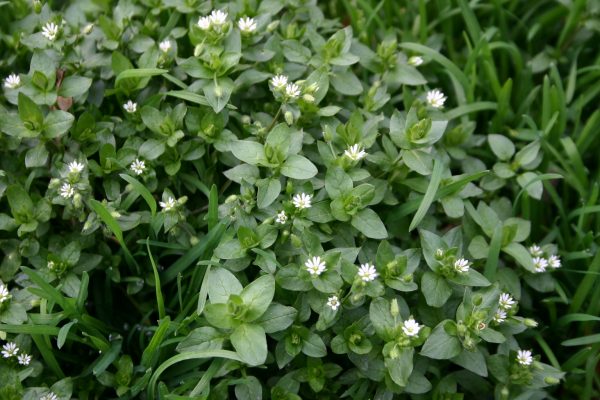
Weeds – Identification with Pictures
Weed control in the landscape is a tough business. You have to know a lot about the weed in question just to get started! As in most situations, a picture is worth a thousand words. Websites The University of Georgia...
Take All Disease
I am very pleased with my St. Augustine lawn. Despite dire predictions, it has not yet frozen in winter but it has spread handily in moderate shade. A problem that was discovered in 1991 by folks in Florida and Texas...
Mowing Height – Calculating
When a homeowner complained that his bermudagrass was showing lots of scalped areas in fall, I turned to Dr. Clint Waltz, my turf specialist friend. —————————-“There are several things working here but the primary issue is mowing frequency. In the...
Bluegrass (Thermal Blue) – Homeowner Comments
When turf companies market a brand new grass without submitting it to long-term University trials in Georgia, I’m at a loss to know whether to recommend their grass for use by homeowners. In the summer of 2005 I asked for...
2005 Homeowner Comments on New Grasses
In 2005 I asked homeowners to evaluate their experiences with some of the newer grass varieties. Their responses are not scientific and should only be taken in addition to your own research when choosing a grass for your lawn. ‘Princess’...
Sod – Watering New
The best time to water a lawn is in the morning, preferably before noon. This allows the grass to dry before nightfall, reducing the risk of disease. Take into account recent rainfall when deciding how much to apply. Watering restrictions...
Lawns – Light Needed
Choosing the right grass for a lawn is initially based on how much sunshine the site receives and how much water you are able to apply in the summer. Consider also the amount of labor you are willing to invest...
Sod – Installed in Fall or Winter
In the Southeastern United States, horticulturists routinely recommend transplanting trees and ornamentals when they are dormant during the late fall or early winter. The root-ball is typically buried deep enough so that soil temperatures are conducive for continued root growth...
Lawn – Choosing the Best Grass
The first and most important question to ask is how much sun will be available to the grass. It is much better to use a grass that will grow in the conditions available rather than fighting the environment year after...
Lawn – Aeration
Anyone who has wielded a shovel in Atlanta knows that the soil usually contains a lot of clay. The tiny clay particles are easily packed tightly together by rain and foot traffic. After a hot Southern summer, the earth can...
Lawn – Soil Preparation
There are three distinct aspects of turfgrass establishment. The first, soil preparation, is probably the most important. The second, planting, may involve seeding, sprigging or sodding. The final step is the care and maintenance for two to four weeks after...
Lawn – False Advertisements
The advertisements are colorful and seductive: “Lush green lawn guaranteed!”, “Miracle sod!”, “Even grows in impossible spots!”. Is there any truth to the claims? As with a lot of advertisements, there is usually some truth to be found. The four-color...
Turfgrasses – Identifying
Unlike trees, which have distinctive leaves, or blooming plants, which have distinctive flowers, turfgrass identification is much more difficult for the amateur . There are five major lawn grasses grown in Georgia. Following are characteristics that will help you distinguish...
Roundup – Using on Winter Weeds
It is tempting to spray glyphosate (Roundup) on green winter weeds when your lawn grass is brown and dormant. However, bermudagrass is the only turfgrass on which I’d recommend this practice – - and with much caution. The bermudagrass must...
Bermudagrass – How is it Spelled
I have long fought editors of my books and newspaper articles about the correct spelling of turfgrasses. Here are the thoughts of Dr. Clint Waltz at UGA: “Bermudagrass is one word and only capitalized at the beginning of a sentence,...